What we work on
A typical home, office, or factory floor now has dozens of small networked devices, speakers, sensors, locks, lights, gateways. Most have no keyboard, no screen, no good way to ask the user for a password. Traditional pairing flows (type the PIN on both devices, scan a QR code, log in to an app) don’t scale and erode security in practice.
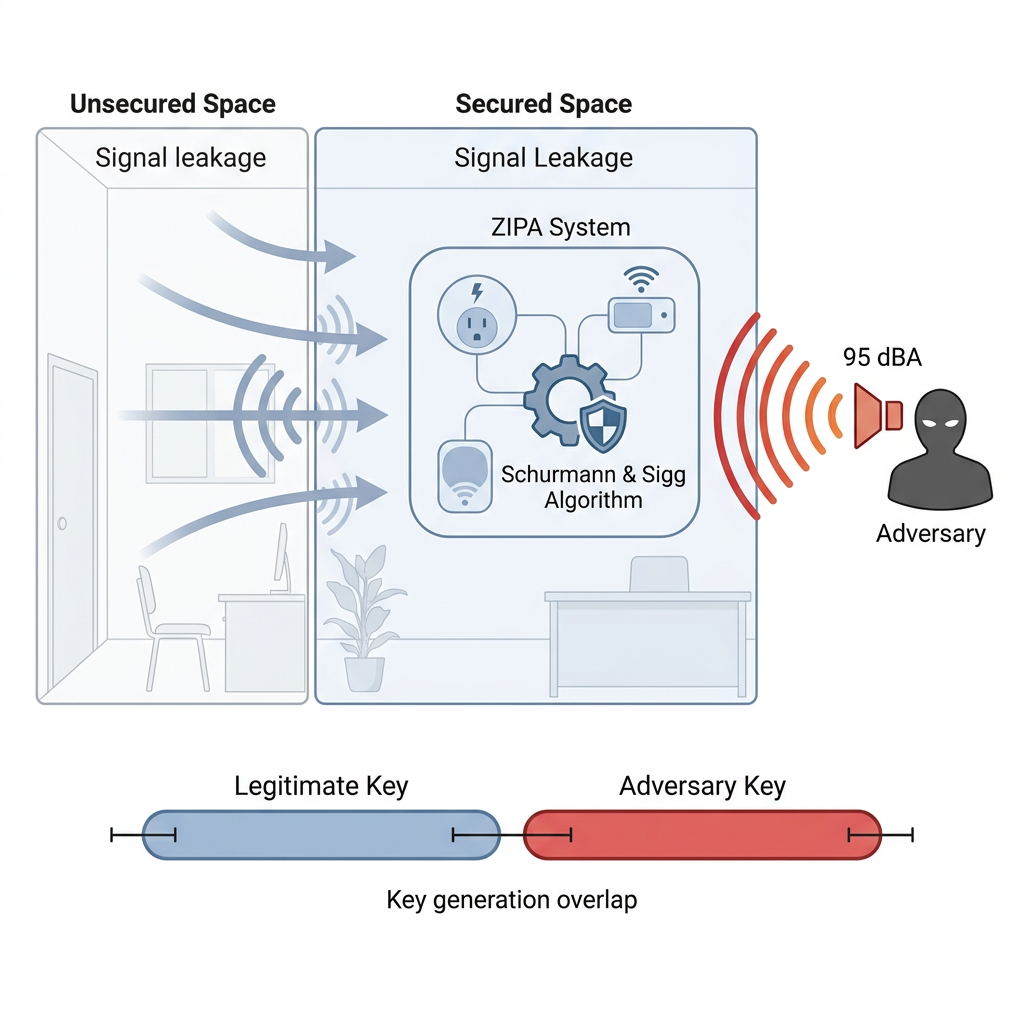
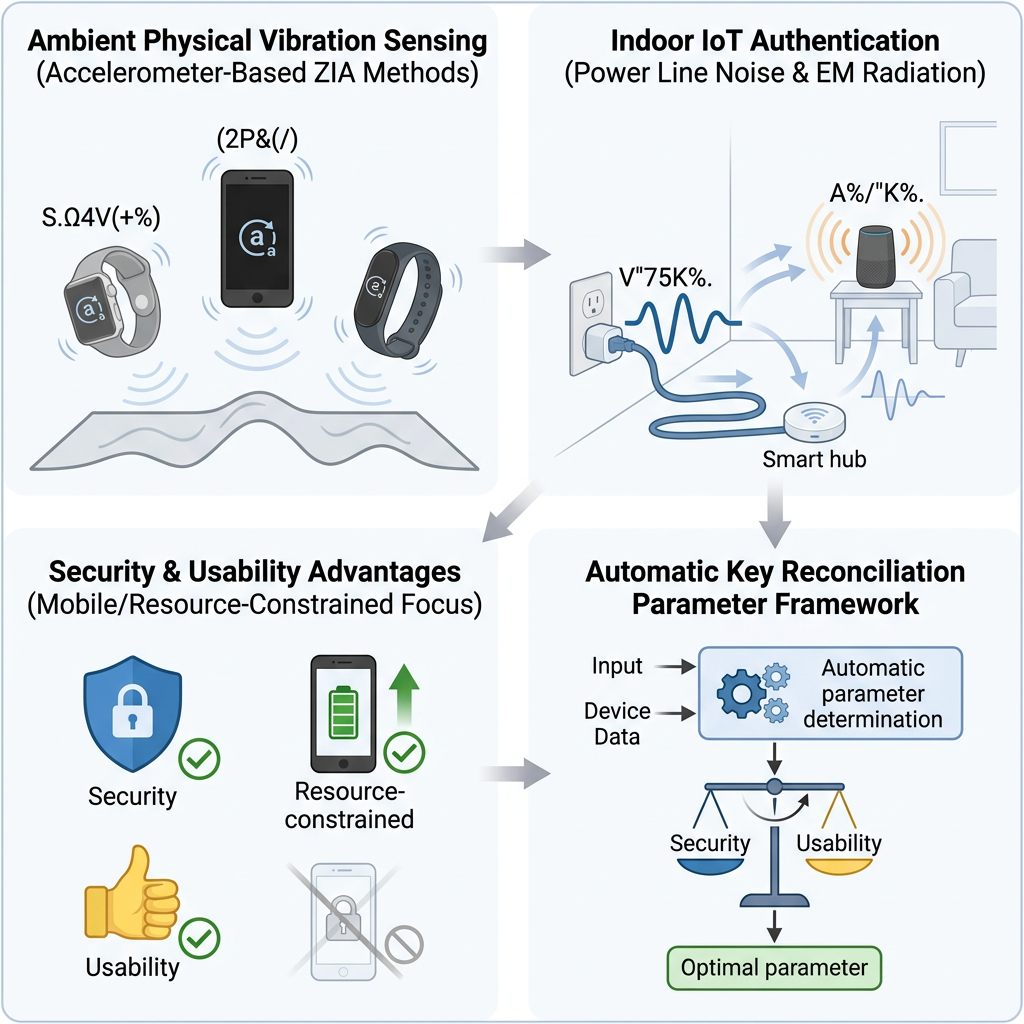
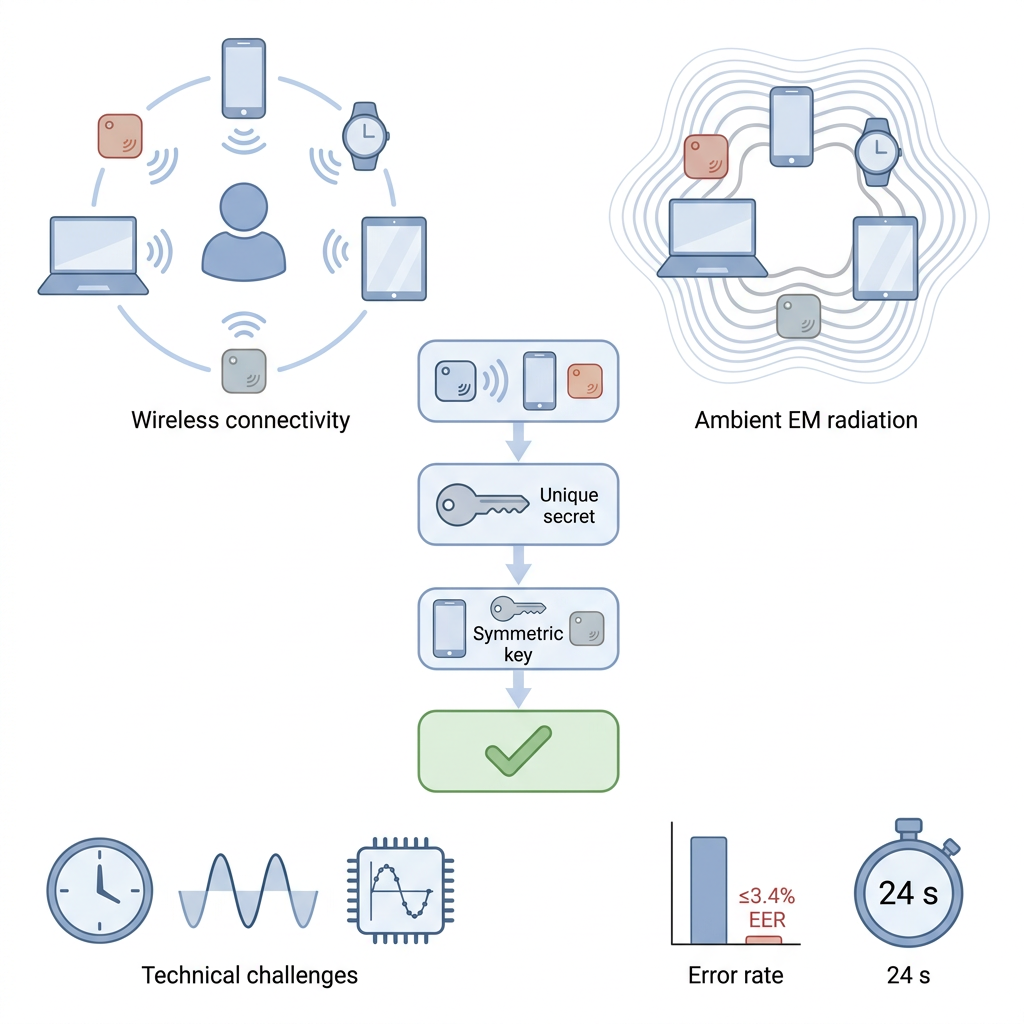
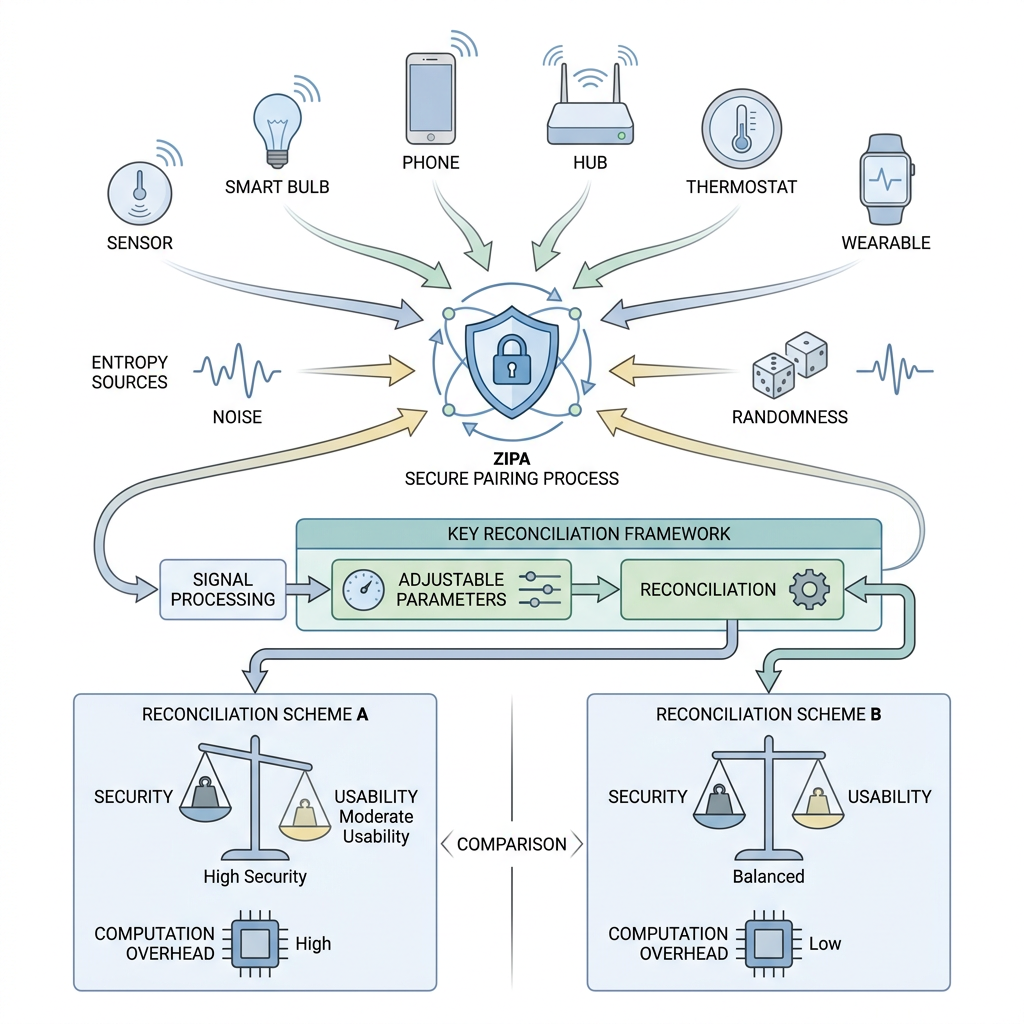
The lab develops zero-involvement pairing and authentication (ZIPA): co-located devices independently observe the same physical environment, extract a shared key from it, and authenticate one another without any human action. We design new entropy sources, study the information-theoretic limits of context-based key extraction, and build threat models that capture real-world attacks against these systems.
Selected systems
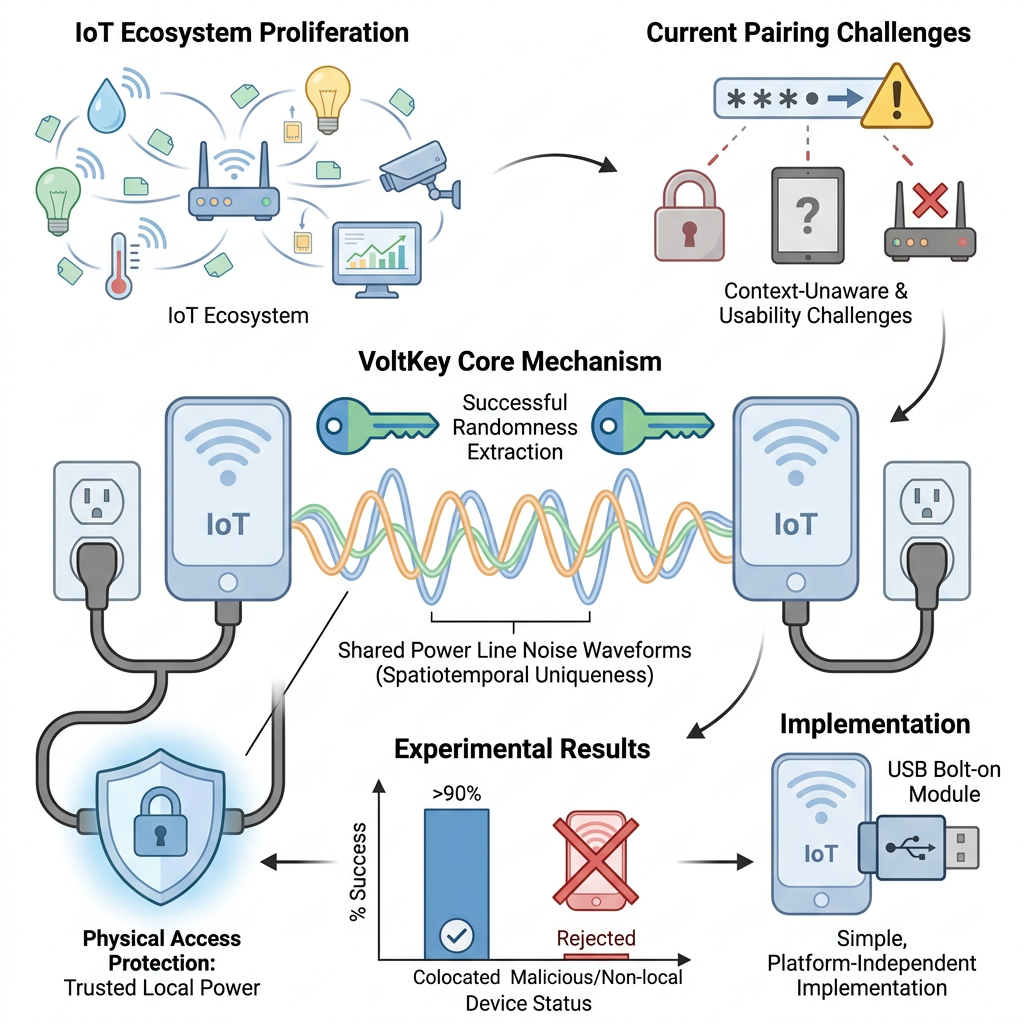
- VoltKey, continuous shared-key generation from local power-line noise. Deployable as a USB-power add-on.
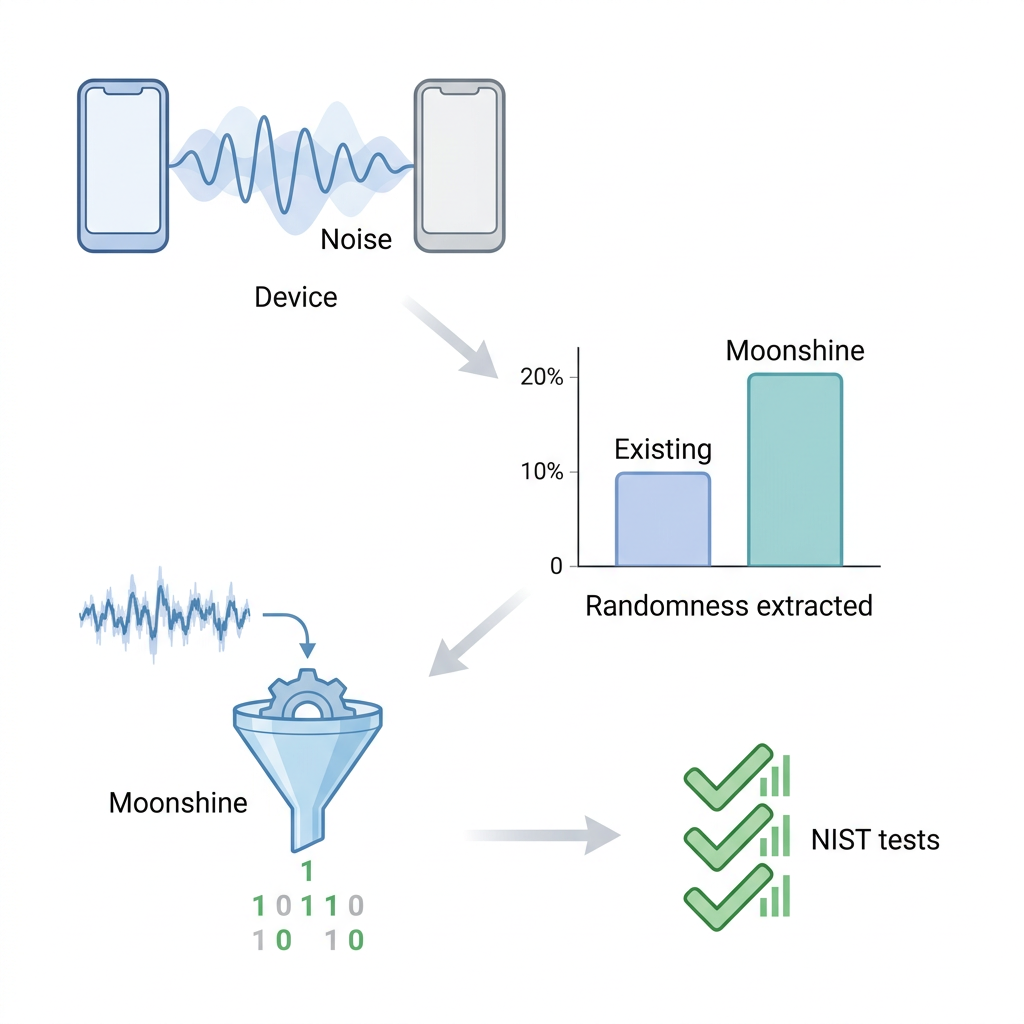
- Moonshine, online randomness distiller that nearly doubles NIST-test key quality from environmental sources.
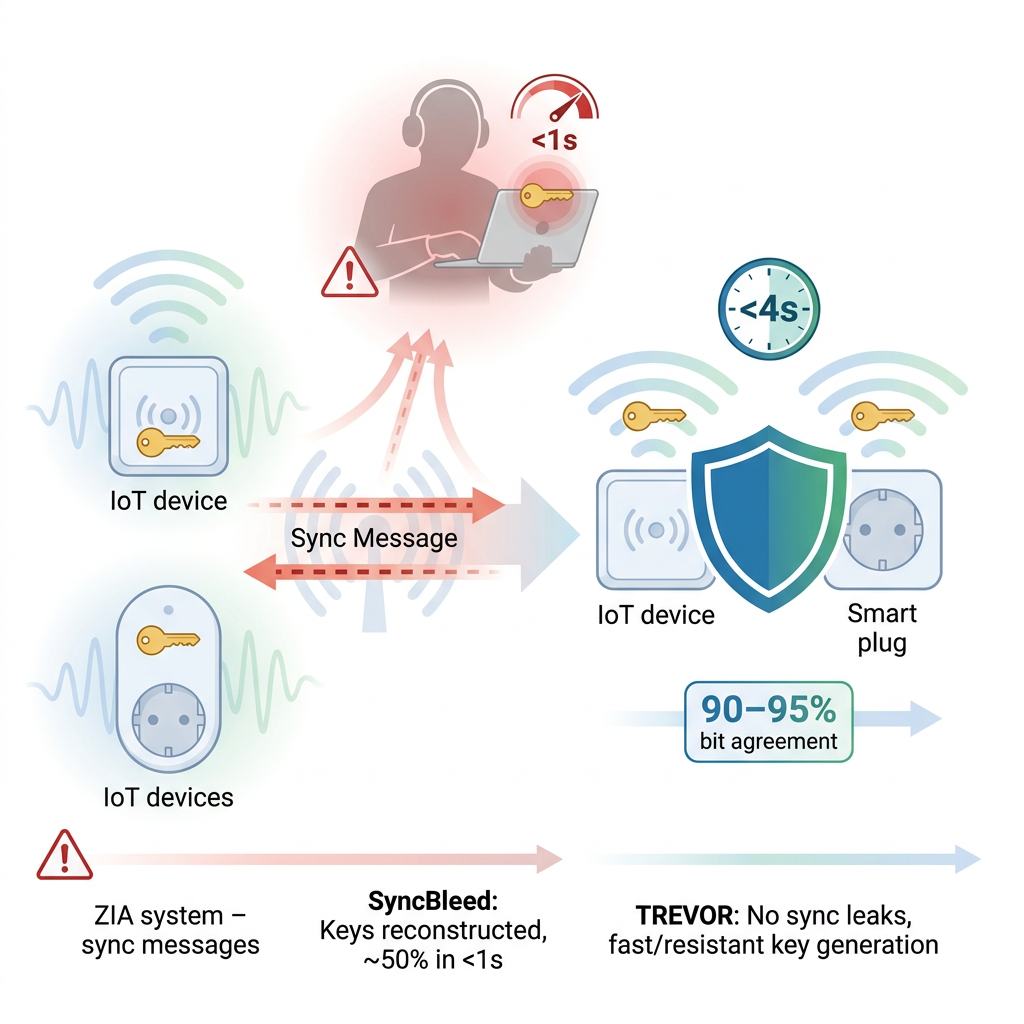
- SyncBleed → TREVOR, first realistic attack on ZIPA’s synchronization channel, plus a sync-free defense.
- DESTION’24 attack, first successful signal-injection attack on a popular ZIPA algorithm.